



Low Temperature Battery
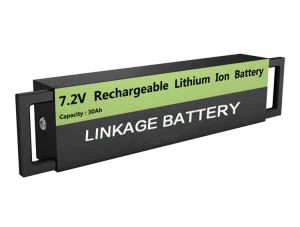
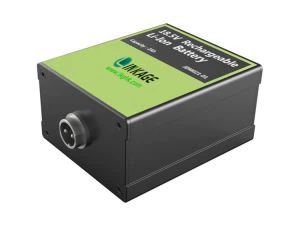
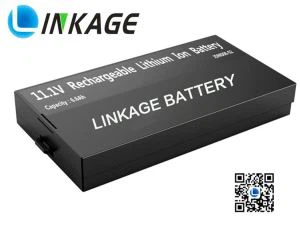
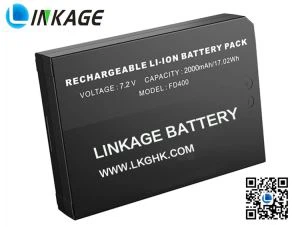
Low-temperature batteries can maintain a capacity retention rate of greater than 90% in Cold Temperatures of listed below -20 ℃, achieve high-current discharge at an optimum rate of 1.2 C, suitable for the military Special usage and have a longer life (> 300 cycles). A low-temperature battery is a unique battery specially developed for the low-temperature defects inherent in the performance of chemical power sources. The low-temperature battery uses VGCF and activated carbon with a specific surface area of (2000±500)㎡/gas additives, and it matches positive and negative electrode materials. Particular electrolytes with special additives are injected to ensure the low-temperature discharge function of the low-temperature battery.
Advantages of Low Temperature Battery for Military
High power density
These high-power discharge batteries possess an input/output density that approaches that of super capacitors. Our batteries surpass typical lithium-ion batteries in terms of safety and reliability.
Low temperature
These batteries can function in temperatures as low as -30℃, exhibiting an extremely low risk of explosion or ignition.
Rapid charging
Our battery boasts a rechargeable design with an enhanced charging current, allowing for faster and safer charging compared to conventional lithium-ion batteries.
Extended lifespan
These batteries offer an extensive life cycle, exhibiting negligible capacity deterioration in charge/discharge cycle tests. The utilization of lithium titanate in the anode promotes longevity by reducing the likelihood of consumption by the electrolyte during formation.




Why Choose Us
High quality
Our products are manufactured or executed to a very high standard, using the finest materials and manufacturing processes.
Advanced equipment
A machine, tool or instrument designed with advanced technology and functionality to perform highly specific tasks with greater precision, efficiency and reliability.
Professional team
Our professional team collaborates and communicates effectively with each other, and is dedicated to delivering high quality results. We are capable of handling complex challenges and projects that require our specialized expertise and experience.
Long warranty
We are confident in the quality of our products and are willing to provide you with long-term technical service support.
One-stop solution
At our manufacturing facilities, we provide a complete package that includes everything required to get you started, including training, installation and support.
24H online service
We try and respond to all concerns within 24 hours and our teams are always at your disposal in case of any emergencies.

In extreme temperatrure atmospheres,Military Usage are still crucial for many troops, yet they have rough temperature level needs. Battery solution can still function normally also at temperatures of -20 ℃ to +70 ℃, also preserve extreordinatry quality. It still be kept a high current discharge of up to 1.2 C in a low-temperature setting of -20 ℃. Discharge at Extreme Temperature at -50 ℃. In the cool setting with extreme temperature of -50 ℃, the battery can still be used, maintaining a capability retention price of greater than 50%.Reduced self-discharge. The self-discharge of military appliance additionally has strict requirements. The longer the self-discharge time of 3.3V-1.6V, the far better. It gives the idea of time as 2 years. It takes two years for our battery to end up being The gadget requires to be reenergized after self-discharge. Relating to the dimension of the battery, it is additionally difficult. Action cam products are created around the length and also width of little dimension and give several series as well as parallels services. Many small winding battery companies can not completely finish the production of this sort of battery. The most significant problem is Cracks and also breaks in the edges of the outlet, so the stacking process has become one of our advantages.
Low-temperature batteries refer to lithium-ion batteries whose operating temperature is below -40°C. They are mainly used in military aerospace, vehicle-mounted equipment, scientific research and rescue, power communications, public safety, medical electronics, railways, ships, robots, and other fields. Low-temperature lithium batteries are classified according to their discharge performance: energy storage, low-temperature lithium batteries, and rate-type low-temperature lithium batteries. According to application fields, low-temperature lithium batteries are divided into low-temperature lithium batteries for military use and industrial low-temperature lithium batteries. Its use environment is divided into three series: civilian low-temperature batteries, special low-temperature batteries, and extreme-environment low-temperature batteries. The application areas of low-temperature batteries mainly include military weapons, aerospace, missile-borne vehicle equipment, polar scientific research, frigid rescue, power communications, public safety, medical electronics, railways, ships, robots, and other fields.Low-temperature lithium batteries have the advantages of a lightweight, high specific energy, and longevity and are widely used in various electronic devices. Among them, the low-temperature polymer lithium-ion battery also has the advantages of simple packaging, easy to change the geometric shape of the storm, ultra-light and ultra-thin, and high safety. It has become the power source for many mobile electronic products.It cannot use ordinary civilian batteries at -20°C, and it can still use low-temperature lithium batteries, usually at -50°C. At present, low-temperature batteries are generally used in an environment of ℃ or below. In addition to communication power supplies, military portable power supplies, signal power supplies, and small power equipment drive power supplies also require the use of low-temperature batteries. These power supplies also have low-temperature performance requirements when working in the field. Low-temperature lithium batteries are widely used due to their lightweight, high specific energy, and long life. Low-temperature lithium batteries are made of unique materials and processes and are suitable for use in sub-zero cold environments.

The Specifications for Low Temperature Battery for Military Should Meet Certain Charging Requirements at a Certain Temperature
One of the prerequisites for military low-temperature batteries is that the larger the capacity and the lighter the weight, the better.The only batteries that can meet the requirements are polymer lithium batteries, lithium iron phosphate batteries and ternary lithium cobalt oxide batteries. . Among the three low-temperature lithium batteries, polymer lithium batteries have the highest energy density and lightest weight, followed by ternary lithium cobalt oxide batteries, and finally lithium iron phosphate batteries. Possesses high-quality low-temperature cycle characteristics, can complete the electric cycle for 300 weeks, the capacity retention rate is over 85%. Weight is a key element in military equipment, especially in single-soldier operations. The light load of the power supply will directly affect the efficiency and safety of soldiers performing tasks. The reasonable discharge capacity of low-temperature batteries directly affects the endurance of electronic equipment. The difficulty also affects the total time allowed for soldiers to perform their tasks. Low-temperature lithium batteries used in the military must meet certain testing standards. Regardless of the machinery and equipment of civil, military or special industries, the safety factor of the battery is a key element that must be considered. Only different uses or application places have different specifications for the safety factor of rechargeable batteries. Military low-temperature lithium batteries have relatively high safety factors. First, rechargeable batteries must undergo shooting experiments, and the batteries must not explode or ignite. Secondly, in high-intensity collisions and collisions, the batteries must ensure safety and avoid casualties. Because the low-temperature natural environment is very harmful to the battery performance, it is a relatively difficult technology to complete the battery charging of the rechargeable battery in the low-temperature natural environment. The military low-temperature lithium battery is generally charged in the outdoor room, and the working temperature is high. See around −20°C, so military low-temperature batteries must consider this basic standard. Especially when charging in the open air, you should consider -40 degrees to charge the battery. Low temperature will seriously harm the work of rechargeable batteries, and the service life of the battery has always been a flaw. The main hazard of low temperature to rechargeable batteries is the problem of lithium analysis. If the relative regulations are not met in the production process, the service life of low-temperature rechargeable batteries will be greatly shortened because of the excessively fast lithium extraction rate. Although low-temperature lithium batteries use special raw materials and secret recipes, compared with lithium batteries at room temperature, their service life is still very different. Therefore, the service life of military low-temperature lithium batteries is generally one year or longer. Military low-temperature lithium batteries have regulations on the safety factor of transportation, which are higher than the regulations of general export foreign trade transportation vehicles. Because military batteries are more complicated to transport in the natural environment, the vibration of one object is more complicated than other objects. When exposed to vibration, the lithium batteries inside the rechargeable battery will not be prone to short-circuit failures or common failures.

Reasons Why Low Temperature Battery for Military Are Popular
Low-temperature lithium-ion batteries are a kind of lithium-ion battery that can work normally under extremely low temperatures. They are mainly used in military and industrial which ask work normally in an environment of about -40℃, keep at more than 80% of the original discharge capacity while operating at a minimum of -50℃. But usually for normal applications, such as electric motorcycle, RV, boats, little cars and solar energy storage battery, battery can work at -20℃ is enough. Lowering the ambient temperature causes chemical reactions to proceed more slowly, so a battery used at a low temperature produces less current than at a higher temperature. As cold batteries run down they quickly reach the point where they cannot deliver enough current to keep up with the demand. If the battery is warmed up again it will operate normally. Low temperatures increase the viscosity and tension of the electrolyte thus worsening the diffusion and movement of the lithium ions of the positive and negative electrodes. This increased battery resistance impacts the ability of the battery to operate properly. The main effect is the loss of efficiency of power output, as the majority of the battery’s power will be used to generate heat to reduce battery resistance. The activity of the lithium ions in the positive electrode material decreases in low temperatures. The cold temperatures will increase the resistance of the electrolyte and decrease the transfer rate of the lithium ions thus reducing the amount of available energy. This could result in up to an 80% capacity loss based on the temperature and discharge rating.
How Low Temperature Battery for Military Work in Cold Weather
Off-grid living can become treacherous when the temperatures drop below freezing, and you want to know that you have your necessities covered. Lead-acid batteries tend to have a lower performance rate than their lithium counterpart. This makes lithium batteries a top power source for anyone wanting to explore places where the temperatures drop to frigid conditions. The damage to the battery when charging at colder temperatures is proportional to the charging rate. Charging at a much slower rate can reduce the damage, but this is rarely a practical solution. Temperatures below the 0°C mark will reduce both efficiency and usable capacity of lithium batteries but still operate with very little loss providing 95-98% of their capacity. When temps fall between 0°C and -10°C,batteries cannot be charged at higher than 1C. When temps fall between -10°C and-20°C, batteries cannot be charged at higher than .05C. At approximately -30°C,battery Ah capacity drops to 50%. At freezing (below -30°C), capacity is reduced by20%. These charging rates will definitely increase charging duration and complicate the entire process. When charging at above-freezing temperatures, the lithium ions inside the battery are soaked up as in a sponge by the porous graphite that makes up the anode, the negative terminal of the battery.

Differences between civilian batteries and Low Temperature Battery for Military
Different types of military batteries of the real use of the environment will lead to different military battery standard requirements. But there will be the basic requirements of the standard, that is, the impact drop requirements are basically the same, but the key equipment requirements over the gunshot test standards. As for temperature, capacity, life, etc., will be based on the application requirements of the equipment to make changes. High security in the high-intensity impact and blow, the battery to ensure safety, will not cause personal injury or death. To ensure that the battery is effective and reliable in use. High environmental adaptability to ensure that in different climatic conditions, high intensity electromagnetic environment, high/low pressure environment, high radioactive radiation environment and high salt environment can be used normally. For example, we take the military back that wireless communication equipment, the battery standard requirements of the first must pass the gunshot test, there is a physical drop collision test. Then is the demand for endurance tasks, this has a short-term and long-term. Normal general is 15 days of endurance use. The application of military lithium battery covers the land warfighter system, army combat vehicles, special communication equipment, sea submarines, underwater robots, unmanned reconnaissance aircraft, satellites, spaceships and many other military types. Military equipment power supply energy density, endurance time, volume and weight are important factors affecting the ability of troops in combat, lithium batteries have high energy density, small size, light weight, long cycle life, small self-discharge rate, no memory effect, good low temperature performance, reliable use, low maintenance costs, fast charging, high current discharge time and many other advantages, is the first choice for military equipment power supply. Analysis from the material, civilian batteries do not have high requirements for manufacturing materials, as long as they meet the basic requirements, that is, the storage function, a certain service life, etc. Military batteries have higher requirements for electrode materials, such as larger specific surface area and porosity, better conductivity and thermal conductivity, higher specific energy density, etc. Compared with civilian batteries, military batteries are stronger in terms of performance, with longer range, higher conductivity, better durability and multiplier performance, better resistance to high and low temperatures and radiation resistance.
Our Factory
We have first rate production line, the professional engineers working with us, Grade A BMS technology, which makes the battery pack with safety and long recycling life.Military Lithium batteries, e bike battery, vehicle batteries, golf cart battery, starter battery,Military, underwater machine, subsea marine, solar storage E bike, Electric vehicle, Medical. Automatic soldering machine, ultrasonic wave shielding machine.

Certificate

FAQ
Q: What are the common chemistries used in low temperature batteries for military applications?
Q: How do low temperature batteries maintain performance in extreme cold?
Q: Can low temperature batteries be recharged?
Q: What is the capacity of low temperature batteries?
Q: How long do low temperature batteries last?
Q: What is the efficiency of low temperature batteries?
Q: Can low temperature batteries be used in non-military applications?
Q: Can low temperature batteries withstand high temperatures?
Q: What is the future of low temperature batteries for military applications?
Q: Can low temperature batteries be replaced in the field?
Q: What is the weight of low temperature batteries?
Q: What is the discharge rate for low temperature batteries?
Q: What is the cycle life of low temperature batteries?
Q: What is the self-discharge rate for low temperature batteries?
Q: What is the maintenance required for low temperature batteries?
Q: What is the warranty for low temperature batteries?
Q: What is the safety protocol for handling low temperature batteries?
Q: What is the energy density of low temperature batteries?
Q: What is the power output of low temperature batteries?
Q: Is low temperature good for battery?